THANK YOU FOR SUBSCRIBING


Logistics Tech Outlook Weekly Brief
Be first to read the latest tech news, Industry Leader's Insights, and CIO interviews of medium and large enterprises exclusively from Logistics Tech Outlook
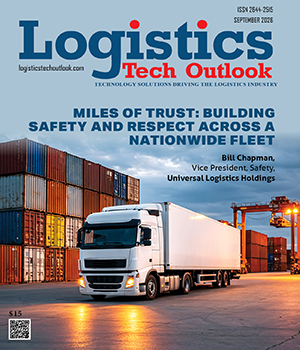
Behind the Wheel to Safety Director After graduating from the University of Missouri in 1996 with a bachelor's degree in economics, I began my career at FedEx. Fresh out of college, I accepted a tractor-trailer driving job and completed comprehensive driver training. I spent about three and a half years driving in the New England area before transitioning into management. I later accepted an operations manager position in St. Louis, Missouri, overseeing approximately 30 to 40 drivers. After about a year, I was promoted to manage an airport facility, where I led a larger team for roughly ten years. Seeking further growth, I joined Central Transport in 2011 as a regional safety manager, responsible for safety across an eight-state territory and 25 to 30 terminals. My role involved all aspects of regulatory compliance, including FMCSA, DOT, OSHA, Workers’ Compensation, and EPA regulations. A year later, I was promoted to Safety Director at Central Transport, a position I held until December 2019. At that point, the owner of Central Transport, who also leads Universal Logistics Holdings, appointed me to oversee safety for the entire holding company. Since January 2020, I have been responsible for all safetyrelated matters across Universal Logistics Holdings. The company operates under approximately 14 DOT numbers, with around 5,000 tractor-trailer drivers spread across 12 to 14 different operating authorities. Our business spans four main divisions: truckload, dedicated, intermodal, and contract logistics. Managing safety compliance across such a broad and diverse operation keeps me fully engaged and constantly learning. Managing Safety across Borders No two days are the same when managing safety for 5,000 truck drivers across multiple business units. I usually begin my day by checking emails for urgent issues. When I’m in Michigan, I spend several weeks each month working directly with my team. The rest of the time, I travel—typically between 50
Matt Grossi, Partner & Marco Grossi, President and Co-Founder
Rising freight costs, increasingly complex logistics networks, and growing customer expectations have made every transportation decision a business decision today. Organizations have access to more operational data than ever before, yet many still struggle to transform that into actionable insights to reduce cost and improve performance. In an era where artificial intelligence promises to reshape supply chains, one truth remains constant: meaningful innovation begins with reliable data and an unwavering commitment to a bespoke client experience above all else. That philosophy has guided Orca for more than a decade. The company has remained steadfast in its commitment to freight audit and payment, building deep expertise that helps organizations gain control over transportation spend while improving visibility across supply chain and delivering a client experience built around each organization's unique needs. “Everything we do at Orca is built around delivering a bespoke client experience — because for us, the client experience and value creation comes above all else.” says Marco Grossi, president and co-founder..


Hangar A automates e-logistics end-to-end, turning delivery into a powerful growth engine for businesses. It empowers brands to scale nationwide without the burden of building or managing their own infrastructure. Powering this ability is Hangar A’s Express Cargo Management System (eCMS), a tech-enabled platform that seamlessly integrates with client systems, including TMS, OMS, WMS and ERP. It consolidates first-, middle- and last-mile operations into one cohesive ecosystem. As demand for fast, reliable delivery continues to grow, many companies face mounting logistical constraints. These include limited distribution points, oversized or complex shipments and outdated systems that can’t keep pace. For many, scaling without intelligent automation becomes a struggle. Hangar A tackles these challenges with a unified logistics network, smart automation and full dock-to-door transparency. Through a single, easy-to-use platform, it delivers next-day and two-day U.S. shipping to manufacturers, e-commerce brands and omnichannel retailers, along with real-time visibility and complete operational control. “Visibility is the number one reason customers choose Hangar A over other options. They’re not just investing in speed, they’re gaining clarity, control and peace of mind at every step of the journey,” says Kevin Kerns, CEO. Hangar A’s Command Center Console provides shippers with end-to-end oversight, from booking and cargo space allocation to first-mile pickup, in-transit exception management and final proof-of-delivery. On the other side, a user-friendly interface keeps customers informed with timely updates, reducing support calls, smoothing operations and strengthening brand trust. With its resilient, scalable logistics backbone, Hangar A accelerates deliveries and empowers brands to expand their reach, strengthen customer relationships and grow with confidence. A notable example is a luxury e-commerce apparel brand, previously constrained by its single East Coast distribution center, which struggled to provide affordable nationwide shipping. Traditional express services were prohibitively expensive, and ground shipping disappointed West Coast customers. After integrating its WMS with Hangar A’s eCMS, the brand gained real-time visibility, automated sortation and same-day fulfilment, achieving one to two-day nationwide delivery while reducing costs and accelerating customer and revenue growth.
Weston LaBar, Chief Strategy Officer
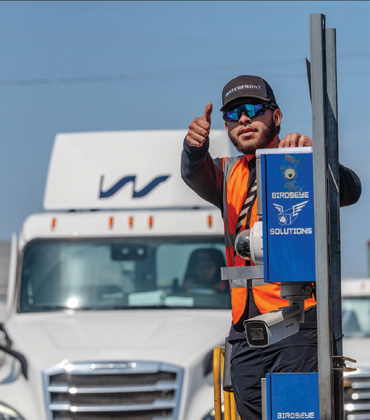
The ports of Los Angeles and Long Beach move more cargo than any other U.S. gateway. At this scale, delays are costly for shippers and logistics partners, but with the right partner, congestion becomes manageable. This is where storage capacity, combined with resourcefulness—the very qualities that characterize Waterfront Logistics—defines success. With yard space for over 5,000 containers, 600,000 square feet of warehousing, cross-docking, transloading and direct rail access, Waterfront functions as an anchor point that keeps freight flowing in the nation’s most critical gateway. Its flagship facility, located less than five miles from the ports, spans 85 acres and is situated in the designated overweight corridor. While this advantageous location provides a strong foundation, the core of Waterfront’s operation is its guiding principle—“We Move It Like We Own It.” This ethos of ownership and dedication enables the company to meet the specialized needs of its customers expertly and actively contribute to the broader supply chain ecosystem. “We have the unique ability to balance specialized customer needs while actively contributing to the broader supply chain ecosystem,” says Weston LaBar, chief strategy officer. A Yard Defined by Location and Security Proximity is only the beginning. Waterfront’s two gated entrances, one of which is across the street from the Union Pacific Intermodal Container Transfer Facility (ICTF), reduce congestion and give drivers fast, predictable access. The yard accommodates wheeled and grounded storage, allowing customers to stage containers for long or short durations without tying up equipment or incurring inefficiencies.
Warehouse Management

Nathan Kurland, Head of US Chemical Operations, Trimac Transportation
Warehouse Management

David Horak, Vice President, Operations, Carolina Handling
Freight Forwarding

Kelly Picard, CEO, Hackbarth Delivery Service
Intelligent Transport Systems

Mike Beckwith, VP of Operations, Odyssey Logistics

Matt Maglio, Regional Vice President, Greyhound Lines

Inventory Management
Daniel Avram, Vice President of Advanced Software, SAVOYE

Natasha Rich, Manager of Supply Chain Operations, OIA GLOBAL
Payment management introduces another important operational consideration because transportation networks frequently require coordination across multiple carriers, payment schedules, currencies
GPS fleet tracking enhances visibility, supports preventive maintenance and improves customer service.
Connecting the Systems Behind Modern Freight
Orca, recognized as the Top Freight Audit and Payment Solutions Provider 2026. Its freight-audit focus combines data cleansing, supply chain analytics and AI capabilities with a client-specific approach. Worldwide Software Systems brings procurement, warehousing and shipment documentation together through its EASY© systems, helping freight forwarders reduce duplicate data entry and give customers greater visibility across shipments.
The issue also features perspectives from leaders working closely with freight and warehouse operations. Kelly Picard, CEO of Hackbarth Delivery Service, discusses the role of accurate data in freight payment and audit, particularly when carriers reconcile invoices with shipper records. Daniel Avram, Vice President of Advanced Software at SAVOYE, examines how flexible integration and real-time visibility can help warehouse execution software work more effectively across equipment and operational environments.
Together, these stories show how reliable information and connected systems are becoming central to better freight management. We invite our readers to explore these perspectives and discover how practical technology and stronger data foundations are helping shape the next generation of logistics operations.