

THANK YOU FOR SUBSCRIBING


Logistics Tech Outlook Weekly Brief
Be first to read the latest tech news, Industry Leader's Insights, and CIO interviews of medium and large enterprises exclusively from Logistics Tech Outlook


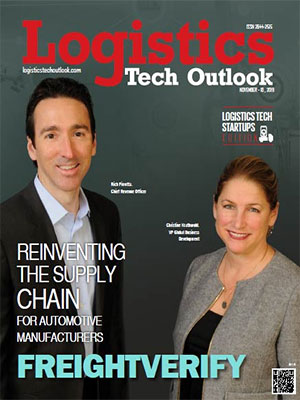
 Rich Pirrotta, Chief Revenue Officer
 As these component parts are largely scattered across the globe, automotive supply chain managers are required to work with thousands of manufacturers, distributors, and suppliers to streamline parts manufacturing and distribution. A delay in even one segment of the supply chain can derail the smooth production of vehicles, cause inventory shortages, and lead to revenue loss and the eventual shutting down of assembly lines.
Clearly, automobile companies cannot afford the slightest of delays, especially while considering that the biggest car manufacturers strictly operate under a “just-in-time inventory” methodology. In this time-strapped setting, automotive firms need a logistics and supply chain network they can rely upon.
Over the past few years, several logistics solution providers have cropped up. However, according to Rich Pirrotta—a line executive and management consultant with broad, cross-organizational experience in sales, operations, turnaround situations, and finance,— the existing industry wide solutions are simply not enough to alleviate the supply chain predicaments faced by OEMs, automotive suppliers, and other complex enterprises. This is where FreightVerify, a cloud-based company focused on transportation visibility, is in a class by itself. “We are not just a technology company rolling out software. We have actual, deep-rooted expertise in the manufacturing domain,” says Pirrotta, the chief revenue officer of the Michigan-based company.
FreightVerify’s domain expertise is strong. Christine Krathwohl, VP of Global Business Development of FreightVerify, is credited for building the largest automotive global logistics network—with $9Bn of freight under management— during her career at General Motors. For a quarter of a century, Christine has managed global supply chain strategies for not only OEMs, such as General Motors and Ford, but for Visteon, a giant in the automotive supplier space. When Christine brought her outstanding supply chain expertise to FreightVerify in late 2018, the company had already established itself as a trusted ally of the world’s top automotive manufacturers and suppliers. With Christine onboard, FreightVerify has continued to develop specific value propositions that serve the complex enterprise.
At the core of FreightVerify’s offerings is a shipper-centric platform that provides predictive, real-time transportation visibility at every step of the supply chain.
Single Pane to Track Multiple Service Providers
When FreightVerify was launched in 2014, the Founder Lorne Darnell observed that despite the inf lux of IoT and other technologies in supply chains, there remained a major visibility gap with regard to shippers tracking their in-transit freight. FreightVerify assessed that shippers lacked access to real-time data since their providers, truck carriers, and ocean carriers tended to share event-based information only when required. In many cases, shippers didn’t receive information at all and ran into severe operational issues. “And even when shippers did have access to real-time freight information, they were obligated to work through fragmented systems and multiple service providers to access a network view of their supply chain. It was not very efficient, and not the way to make good use of a logistic team’s resources.” recalls Pirrotta.
To dig deeper into supply chain issues ailing the automotive sector, FreightVerify leveraged an in-house, minimal viable product (MVP) model before gradually refining its f lagship platform. During the process, FreightVerify discovered that automotive supply chain managers had significant visibility issues due to the large amount of carrier modes (rail, truck, ocean, air) they had to track, not to mention in real-time. As a result, FreightVerify transitioned from just truck/direct truck mode into less-than-truckload-shipping (LTL) and eventually began tapping into logistics networks of rail, ocean, and air. Pirrotta recounts, “Within that grouping of modes, we worked in a shipper-centric manner, adding carriers that moved products for our shippers in those specific modes. This helped us attain an end-to-end view of all nested segments in a single shipment view on our platform.” With the technology team intentionally designing the user interface to support end-to-end visibility, FreightVerify could drill down into each trip segment—ocean, rail or truck— and look at specific details of the shipments from a real-time perspective.
Today, FreightVerify’s robust supply chain platform acquires data from dozens of sources in the transportation ecosystem—service providers and supply chain networks—to present shippers with real-time freight information in a single interface. Importantly, this information does not need to come from the shipper to enable the FreightVerify platform to deliver. “With a shipper’s sponsorship, we onboard their service providers to our platform, rather than depend on a shipper’s operating plan as the only source of supply chain data. In this manner, if a shipper requires visibility to track 100 different truck carriers, 5 ocean carriers, the 7 Class 1 rail carriers in North America, and 10 LTL carriers, the real-time shipment and visibility information is available in one place: the FreightVerify platform,” states Pirrotta, before adding that the integrated display of multiple carriers allows complex enterprises to quickly gather and normalize data and perform analysis and execution of insights that lead to significant cost savings and efficiencies.

Due to our domain expertise in the automotive sector where part number is critical to the logistics network, our technology team has done the heavy lifting to track shipments in real-time at the part, VIN, SKU, or order number level
FreightVerify’s ability to track multiple carriers simultaneously is a boon for OEMs that typically have various third-party logistics (3PL) companies managing their businesses. “In the past, they have had to approach each 3PL for visibility and route the information accordingly. Even if the 3PL providers have visibility, OEMs have to track multiple carriers separately. We solve this pain point by going into each client’s supplier network (carrier by-mode), consume information from those partners and integrate it within our platform,” explains Christine, who has been a key leader in developing the business requirements for the solution.
To summarize, FreightVerify captures a client’s list of service providers by mode, in its entirety, and portrays their whole network on its platform.
Ultimate Differentiator: A Pioneer in Part Number Tracking
None of this real-time, multi-mode, carrier visibility would be possible without FreightVerify’s vast hub of data sources and domain expertise. Besides acquiring just telematics or GPS positional data, FreightVerify is a pioneer in consuming and providing access to part numbers, vehicle identification numbers (VINs), and order numbers at the shipment level— information that has typically not been available from other logistics solution providers. This level of detail enables the FreightVerify platform to incorporate a lot more than just optimized location and modal assets management features. Pirrotta explains, “Due to our domain expertise in the automotive sector where part number is critical to the logistics network, our technology team has done the heavy lifting to track shipments in real-time at the part, VIN, SKU, or order number level and understand the details of plan versus actual parts.”
Besides tracking the part and order number at the granular level, the FreightVerify platform takes into account information such as carrier, trailer, and route, allowing users to track their shipments through various entry points. “By keying in part number to search for shipments, our clients can track every shipment in transit and make better decisions,” adds Christine,” and for the first time, can understand their in-transit inventory at the Part/ SKU level”
The “better decisions” that FreightVerify’s clients can make—by tracking their shipments at the part number level—are worthy of being highlighted.
For starters, FreightVerify enables automotive manufacturers/suppliers to effectively support “just-in-time manufacturing” by giving them accurate inventory visibility at each element of their supply chain. By doing so, OEMs can align their production cycles with consumer demand trends, and develop the foresight to predict future requirements based on changing marketplace tastes. Also, FreightVerify users can look at inefficient routes and identify opportunities to reduce in-transit inventory in a way that doesn’t constrain their manufacturing operations. By integrating critical freight data with part and order numbers, carrier and service providers are also able to address intricate issues such as data integrity and compliance.

By examining the part number of shipments, FreightVerify’s clients can also ascertain when a shipper has “short shipped” them or when there’s a change in schedule at a customer plant. Christine explains, “Our clients can search by part number to study every single conveyance that has arrived at a plant, or even if it is in transit or scheduled to be shipped. The big benefit here is that workers at the plants or core follow-up groups can make critical judgment calls such, as ‘can we transfer the stock?’ or ‘can we pull ahead the load ’ without having to, as they did in the past, use a chartered f light or premium expedited truck to protect their production.”
 Christine Krathwohl, VP Global Business Development
The unique modal tracking (multiple carriers on the same pane) and content tracking (part numbers, VINs, order numbers) features notwithstanding, FreightVerify has invested heavily in its data integration capabilities— analytics and performance reporting. By leveraging data analytics, FreightVerify offers a dynamic and intelligent Estimated Time of Arrival (ETA) for each shipment in its platform, a feature that Pirrotta sees is of great value. “Our customers tell us, ‘you have the most accurate ETA of any of the logistics solutions.’ We’re pleased to be recognized for this value from our customers, and we are constantly working to enhance the intelligent ETA” he says.
Based on the intelligent ETA, Pirrotta adds, “If a shipment is running late, clients can proceed with other plans, and decide whether they need to keep a dock open or let the team go home. It’s no longer a question of waiting and hoping that a shipment will show up.”
"With a shipper’s sponsorship, we onboard their service providers to our platform, rather than depend on a shipper’s operating plan as the only source of supply chain data"
Lastly, the FreightVerify platform also offers integrated performance reporting, such as dwell time, detention, and demurrage. By leveraging AI and BI, the platform maps relevant shipping information across all supply chain locations and provides users a holistic view of every activity taking place in their particular networks. Christine elaborates, “The core performance reporting highlights where the inefficiencies lie within a network. It gives our clients the capability to confidently make decisions in real-time rather than waiting for an event to occur.”
The prudency of FreightVerify’s real-time performance reporting was on full display when the company served a large OEM. Before switching to the FreightVerify platform, the client experienced inaccurate and delayed freight information, which prevented them from communicating where they wanted areas of improvement with their logistics service providers. “In some cases, they were paying additional fees based on inaccurate data, and had no way of challenging the information. After we provided them with the facts of what was happening in their network, they were able to negotiate costs (with the provider) from a position of strength and accuracy,” recalls Pirrotta.
As for FreightVerify’s product deployment process, it’s just as unique as the platform itself. According to Christine, the company offers a “proof of value” rather than a proof of concept, “We have demonstrated that we can reduce a shipper’s material follow-up, expedited freight, inventory, and logistics costs significantly. As such, when we meet a new client, we present a proof of value that is relevant to their particular segment.”
A neutral platform, FreightVerify is purpose-built for every player across the logistics ecosystem. More importantly, FreightVerify is not beholden to any carrier or 3PL and operates independently.
The future is evidently bright for FreightVerify, which is expecting to grow and continue to deliver high customer value in the coming years. Besides concrete plans to expand its footprint to the European and Asian markets, FreightVerify intends to serve a clientele that isn’t restricted to the automotive and OEM sectors. “Having built a solution to serve the complex enterprise in automotive, we believe we can replicate the same approach in other verticals,” says Pirrotta.
Headquartered in picturesque Ann Arbor, Michigan, FreightVerify is invested in ramping up its “data collecting” efforts and eventually segue into building advanced supply chain capabilities. FreightVerify is looking at effective ways to apply data science and predictive analysis to the significant amount of data it accumulates on a daily basis. “Be it AI or machine learning, or other technologies to improve location management, we are constantly seeking ways to add new components to the platform and drive value for our customers,” reveals Christine.

In the next step of its evolution, the FreightVerify platform will collect data from smart vehicles (IoT tracking data) and integrate the same with its shipment and part number data. Pirrotta concludes, “We’re just as customer-centric as we’re innovative. That’s why we partner with our customers to solve critical issues. This will always be our approach to driving solutions that the supply chain needs.”

Company
FreightVerify
Management
Rich Pirrotta, Chief Revenue Officer and Christine Krathwohl, VP Global Business Development
Description
A cloud-based freight logistics technology company that addresses challenges for large and complex enterprises through industry-defining intelligence. One of the Top 10 Logistics Tech Startups, FreightVerify offers a shipper-centric platform that provides predictive, real-time transportation visibility at every step of the supply chain. The robust supply chain platform acquires data from dozens of sources in the transportation ecosystem to present shippers with real-time freight information in a single interface. Besides allowing shippers to track multiple carriers on the same pane, the platform also allows users to uniquely track shipments through part numbers, VINs, and order numbers


Ahmed Abdelhalim, BU manager for industrial IoT at Alps Alpine outlined what the electronic components maker was doing to enhance visibility on returnable packaging. Abdelhalim said the cost of handling packaging was eight times that of its material cost and that currently at least 10% of packaging assets were lost, and he outlined what the consequences of a lost container might be, ultimately a risk to production. Added to which, the absence of the correct container means resort to available disposable packaging, which adds to cost and is not sustainable.
Greater visibility on packaging is therefore a priority for the automotive industry. That involves a need for greater collaboration across the supply chain given the range of stakeholders that are involved with handling the containers of parts, from OEM and supplier, to transport operator delivering the goods and the service network.
“This lack of collaboration adds a level of complexity rather than having one source of truth,” said Abdelhalim, adding that good data was needed to identify the bottlenecks.
Keeping tabs on containers
Alps Alpine is providing an asset-tracking tool that provides full end-to-end traceability of the overall system. According to Abdelhalim, a user can reduce the packaging leaks and asset losses, and will benefit from a fully automated booking of containers going to the carmaker and leaving it. With that information the user can anticipate shortages and take action to remedy the problem.
He said the technology is simple to apply, comprising of a tracking device attaches straight on to the container and gives its location and status. Data is sent through mobile communications and uploaded to the cloud, which provides intelligence on container utilisation. It then provides data to the user. “You have one source of truth regardless of where the carmaker or distributor are,” said Abdelhalim.
More importantly, it is a plug and play solution, according to Abdelhalim, meaning it starts working immediately on application. The device and the system it feeds into are smart enough to provide data on the container as soon as it starts moving throughout the lifetime of its movement. “Then you can predict the bottlenecks and that is where you get return on investment,” said Abdelhalim. For between 6-12 months you can see the value added by adopting this solution on the container.”
Typical use cases indicate significant savings for reduced loss rate. In one example of a pool of 600,000 units the tool garnered a saving of €12m after one year because of 50% reduction in loss. The reduction of disposable packaging can yield a saving of €1.1m and optimising fleet size can bring €2.07m by reducing buffer units by 20%.
Intelligent ETAs
Over at FreightVerify, Christine Krathwohl, vice-president of global business development, highlighted how its data-driven ETAs provide visibility for the movement of inbound parts and outbound vehicles across all modes of transport and use machine learning to predict disruption. The company, which is expanding in Europe, is also now providing track and trace services to the aftermarket.
“We provide real-time visibility, whether it be a component or VIN, at all times with the location of that material or VIN, and with an ETA,” said Krathwohl. “Our innovation is a real-time intelligent ETA that continues to update along the journey.”
According to Krathwohl, compared to traditional services that would provide two to three ETA updates along the journey from factory to customer, FreightVerify performs hundreds of calculations along the journey, providing real-time updates throughout.
Combining supply chain automation and AI software, the real-time modelling of the supply chain gives shippers, dealers and service centres all round visibility. FreightVerify maintains that its intelligent ETAs are “the cornerstone for logistics, sales and marketing teams at OEMs” who organise deliveries of vehicles including door-to-door deliveries. The ETAs are also useful to parts supplier, claims organisations and aftermarket divisions ensuring deliveries are on schedule.
“A lot of OEMs want to measure ETA accuracy, which reflects how well [their] network is performing,” said Krathwohl. “The important thing is, how do you measure that first ETA and then how do you measure all [the following] ETAs and let your customer know what the most recent one is based on conditions. That includes parts going into you just-in-time manufacturing, cars going to your end customer or dealer, or now the aftermarket world.”
Krathwohl pointed to the fact that service parts provided the most revenue for dealerships and the FreightVerify tool supported efficient performance and service by providing accurate knowledge of when the service part in demand would arrive.
FrieghtVerify is now providing OEMs with real-time updates as well as launching VIN View to give 10,000 dealers a view of where their vehicles are every day, and in the last week month the company has also launched Part View, which allows dealers to see where their service parts are in the delivery process.
360 view of delivery
FedEx is also focused on how to increase shipment visibility and predictability, as well as customised services, all against a background of reducing carbon emissions. Markus Ramirez, managing director of global sales for the Automotive Solutions division, highlighted a new tool called FedEx Surround Select, which aims to enhance timely deliveries with precision by cutting out excess inventory and inefficiency, as well as helping customers to predict delays before they happen.
“We focus on high performance in delivering the service but with such a complex network the issue is that delays are constant we have to battle,” said Ramirez, adding that external factors such as weather, strikes, accidents and acts of war all had to be factored in.
“Our innovation is essentially incorporating these internal and external factors and presenting them in an easier and more consistent way to users.”
One of those users could be a car dealer able to see incoming shipments and thus able to schedule workshop operations based on the accurate arrival time of the part.
Ramirez said the tool collected data from multiple sources and presented it in a simple comprehensive way enabling a company to see the status of all of its shipments globally or to use the interface to connect to different specific systems. The system is live and FedEx has been using it internally for 18 months, with a trial phase now underway in Europe.
“We have a couple of interactive dashboards [working on] real-time data and it works by exception management so you don’t have to look at all your shipments, only the ones that have an issue,” said Ramirez. “We are able to customise a lot of views to make them dedicated to our customers [and issue] predictive alerts.”
Those custom views include clearance status, delivery exceptions and transit time delays.
Ramirez emphasised that tool helped reduce complexity, provide maximum visibility of all shipments and provided predictive alerts, proactive decision making through an easy-to-use interface.
Figuring out the supply chain
Utilising modern mathematics and advanced technology s2 data & algorithms is a start-up tech firm that is helping OEMs and tier suppliers to develop industrial applications and operational process excellence specifically around optimising transport. Its CEO Dr Stefan Kremsner explained how the company was able to utilise algorithms and optimisation techniques to make the automotive supply chain more sustainable, while making the most out of every transport and automating the whole process.
Looking at inbound parts and material shipments there is a big difference between a strategic transport plan and the reality of full truckload (FTL), less-than-truckload (LTL) and milkrun operations, according to Kremsner. Operations are volatile from the production line to the warehouse, all which affects deliveries. Inbound loads actually range anything between 48%-72% utilisation and are far from being optimal.
“In the long run this variation changes the way that every transport is utilised and every metre or cube of space wasted means we lose efficiency, we lose money and we lose CO2 emissions,” said Kremsner.
The start-up helps customers look at route and tariff optimisation, and load optimisation, and combine that data with inventory to get the most out of planning.
“We not only have to strategically or tactically plan, we have to be dynamic and daily operative to optimise our transport,” Kremsner. “We must also not just look at ourselves, we have to look at whole supply chain and ask our suppliers can they deliver on time? If we optimise a plan and ask to bring in more material can the supplier also confirm and make sure this happens as well?”
Looking at part numbers and dates s2 data & algorithms connects the information with the whole transport network to make sure that each trailer or seafreight container is optimised to the maximum. Kremsner pointed to two use cases where improvements were tangible.
With one premium carmaker, the company was able to save 20% in costs and CO2 emissions on FTL/full container load (FCL) shipments. The carmaker provided data and s2 used it algorithms to plan ahead for six weeks identifying where it could leverage and consolidate loads to fully increase the load space on the trucks.
“We then integrated this into their SAP, planning on an intra-day level, shifting materials and using mathematics to make it operationally feasible and it turned out we could save up to 20% of cost and CO2 emissions,” said Kremsner.
In a second use case with tier one supplier Yanfeng, s2 optimised FTLs and milk runs across the whole network, planning every transport down to the smallest number to get the most out of capital lockup. “By this dynamic optimisation we basically increased the utilisation by 21.3% saving every fifth inbound transport.
“There are a lot of things we can do in the supply chain, there are a lot of algorithms that can help, a lot of new innovations taking place. It is not just about gathering data for insight, it is about being actionable and doing the right task to achieve those potentials,” said Kremsner.