
THANK YOU FOR SUBSCRIBING


Logistics Tech Outlook Weekly Brief
Be first to read the latest tech news, Industry Leader's Insights, and CIO interviews of medium and large enterprises exclusively from Logistics Tech Outlook


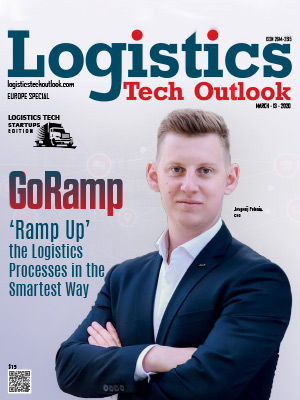
 Jevgenij Polonis, CEO
GoRamp, a SaaS-based transportation management system, is built specifically for manufacturing companies to help them manage and optimize their end-to-end transportation processes and exchange information in real-time. “Everything from freight procurement to order management and warehouse timeslot management, GoRamp has it covered,” says Jevgenij Polonis, CEO of GoRamp.
With the help of GoRamp, manufacturing companies, especially SMEs, can optimize their supply chain processes by avoiding manual analysis of individual excel sheets and exchange information in real-time between all the individuals involved in the logistics chain. This not only gives them better transparency during various supply chain processes but also saves time and administrative costs.

Unlike most products with similar functionalities, one aspect that distinguishes us in this competitive market is that we go the extra mile and make our software simple and affordable for all and implement it in few hours
That’s not all; customers can ensure consistent purchasing of transport services, gain operational information on order status, warehouse loading and unloading management, document management, and virtual communication between shippers and transport partners. “Our ability to bring entire logistics processes at one place, automate transport order requests and information flow, and deliver a clear picture of performance indicators have made us matchless to other solution providers,” states Polonis.
By implementing the GoRamp timeslot management tool in the warehouse, manufacturing companies can solve issues associated to uncontrolled truck flow at loading and unloading points, eliminate additional costs because of downtimes and enable optimization of warehouse workflow while reducing delays. On the other hand, transportation partners have an easy-to-use tool where they could book the best suitable time slot for drivers in advance, avoiding live queues near the warehouse and optimizing drivers driving times.
GoRamp’s result-driven capabilities can be well illustrated using a case study of a client who used to pay an additional amount of seven thousand Euros because of the downtime as the company had too many shipments on Mondays and Fridays. The client had no proper structure to manage the loading, unloading, or deliveries of the truck. To address these issues, the client partnered with GoRamp. Using GoRamp’s warehouse model, the client could solve their warehouse management challenges effectively. GoRamp’s model was implemented in a day, and from the very first month, the client was able to decrease their additional costs for downtime from 5000 to 350 Euros. Another use case is with other manufacturing company, which implemented GoRamp transportation management tool. It resulted in 70 percent automation of repetitive manual tasks, four times faster communication within all supply chain and 20 percent decreased logistics costs.
As companies in the transportation sector today began to understand the importance of centralized data and proper KPIs for defined transportation, GoRamp sees a lot of potential and scalability in integrating its solution with the transportation sector of other industries like agriculture, and the like. “The problem of decentralized data and lack of traceability goes beyond our industry. Hence, we see a lot of potential in integrating our solution with other industries that face the same challenges,” concludes Polonis.

Company
GoRamp
Management
Jevgenij Polonis, CEO
Description
GoRamp, a SaaS-based transportation management system, is built specifically for manufacturing companies to help them manage and optimize their end-to-end transportation processes and exchange information in real-time. With the help of GoRamp, manufacturing companies, especially SMEs, can optimize their supply chain processes by avoiding manual analysis of individual excel sheets and exchange information in real-time between all the individuals involved in the logistics chain. This not only gives them better transparency during various supply chain processes but also saves time and administrative costs. Customers can ensure consistent purchasing of transport services, gain operational information on order status, warehouse loading and unloading management, document management, and virtual communication between shippers and transport partners