THANK YOU FOR SUBSCRIBING


Logistics Tech Outlook Weekly Brief
Be first to read the latest tech news, Industry Leader's Insights, and CIO interviews of medium and large enterprises exclusively from Logistics Tech Outlook


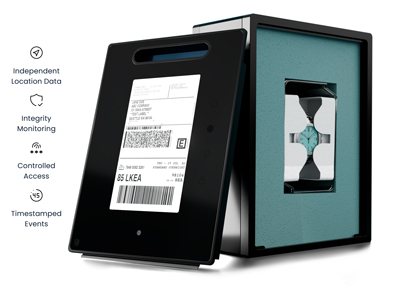
At the center of this system is iCoffer, a reusable connected-custody device built around a universal intelligent door containing core electronics, access-control technology, connectivity and sensing infrastructure. Its interchangeable bases can accommodate shipments of different dimensions, while supporting a reusable model with sustainability and economic considerations.
“Traditional tracking tells you where a shipment is. Connected custody helps you understand what happened to it along the way,” says Andrea Dal Farra, founder & CEO.
Parcel One Inc. has developed a working pre-commercial prototype and is now validating the platform through real-world testing and discussions with logistics and insurance-sector stakeholders.
Adding Context to Every Custody Event
Shipment information is often fragmented across the parties involved. Transportation providers track movement and insurers assess risk, but neither necessarily captures what happened to the physical asset along the way.
iCoffer is designed to capture and record information on location, integrity, access, custody and device status throughout transit. In the event of damage or loss of integrity, the objective is to associate it with the best available location and timestamp, along with information captured before and after the event. In the event of tampering, the system can also capture photographic images to provide additional visual context around the event.
Designed for Reliability and Sustainability
iCoffer is built to make high-value shipping risk more visible and understandable. Rather than replacing existing logistics infrastructure, the company adds a layer of intelligence. By providing data that connects stakeholders, it aims to offer greater visibility, control and a structured record of relevant events across the logistics ecosystem.
For insurers, richer custody data can support risk assessment, incident reconstruction and claims analysis. This is particularly relevant to high-value shipments, which often involve specialized insurance requirements and, at the highest security levels, potentially costly logistics solutions. iCoffer is helping create the data foundation for insurance models better suited to valuable goods moving through conventional logistics networks.
Parcel One Inc. is currently working with IFS Inforsure, an insurance-sector specialist with extensive experience in high-value shipments, to explore how connected custody data can support risk assessment, incident reconstruction, claims analysis and potentially new insurance models built around the technology. Dal Farra emphasizes that connected custody does not promise that a shipment can never be compromised. Its purpose is to make an exception more visible and reconstructable by preserving the information available around the event.
As Parcel One Inc. develops its platform and partnerships, it aims to establish the connected chain of custody as an integral part of high-value logistics. Over time, the custody record could become a trusted input for insurance, authentication, escrow, smart-contract applications and transaction conditions.
Its recognition as the Top Connected Chain-of-Custody System for High-Value Shipments 2026 reflects a commitment to providing stakeholders with a structured record of an asset’s custody rather than location alone.
What Do Connected Chain-of-Custody Systems for High-Value Shipments Track?
Connected Chain-of-Custody Systems for High-Value Shipments record more than a parcel's location. They help establish where goods are, who has access to them and whether their condition changes during transit. Conventional tracking often provides movement updates without enough detail to explain damage, tampering or disputed handovers. Connected systems combine location data, access records, sensor readings and event histories to give stakeholders a clearer view of a shipment's journey. This information can help organizations investigate exceptions, review delivery disputes and understand where additional safeguards may be needed.
How Does Parcel One Inc. Apply Connected Custody Technology to Shipping?
Parcel One Inc. is developing iCoffer, a reusable connected-custody device for valuable shipments. Its design combines an intelligent access-controlled door with electronics, connectivity and sensing technology. Interchangeable bases allow the container to accommodate shipments of different dimensions. The system is designed to record location, integrity, access and custody information throughout transit. It can also capture photographs when tampering occurs, adding visual context to the event record. The company has developed a working pre-commercial prototype and is testing the platform in real-world conditions.
How Can Shipment Monitoring Help Resolve Loss and Damage Disputes?
Connected Chain-of-Custody Systems for High-Value Shipments can help clarify when an incident occurred and what information was available around that event. A chronological custody record can bring together location updates, access activity, device status and integrity alerts. When a package arrives damaged or shows signs of interference, these records may help investigators reconstruct its journey. Near-real-time alerts can also notify authorized users about significant exceptions. Although this information cannot guarantee that theft or damage will never occur, it can provide a more detailed basis for investigation and claims review.
Which Technologies Support Reliable Custody Records?
Connected Chain-of-Custody Systems for High-Value Shipments rely on technologies that capture different aspects of a shipment's journey. Internet of Things (IoT) sensors can monitor asset conditions and integrity, while Global Navigation Satellite System (GNSS) technology provides location data. Cellular networks and Wi-Fi offer additional positioning information when satellite signals are limited. Bluetooth Low Energy can provide further context about nearby devices. Buyers should also assess access controls, alert delivery, data continuity and the ability to review records after an incident. These factors help determine whether a system can support reliable shipment oversight.
How Can Connected Custody Data Support Shipping Insurance?
Connected Chain-of-Custody Systems for High-Value Shipments can provide insurers with additional information for risk assessment, incident reconstruction and claims analysis. Detailed records may help clarify the circumstances surrounding a loss rather than relying only on basic tracking events. Parcel One Inc. is working with IFS Inforsure, an insurance-sector specialist, to explore these applications and potential insurance models for valuable goods. However, better custody data does not automatically reduce premiums, expand coverage or guarantee successful claims. Insurance terms and coverage limits remain important considerations.
What Should Organizations Evaluate Before Adopting a Custody System?
Connected Chain-of-Custody Systems for High-Value Shipments should fit existing shipping operations without causing delays. Organizations should check container sizes, access procedures, connectivity, device recovery and the accuracy of recorded events. Reusable equipment can offer practical benefits, but organizations must also consider how to collect and reuse it for future shipments. Buyers should check how the system handles missing data, delivery disputes and connection failures. They should also separate existing features from planned ones, especially when the system is still in prototype testing. These checks help organizations decide whether the technology meets their shipping and risk management needs.
Company
iCoffer
Management
Andrea Dal Farra, Founder & CEO
Description
iCoffer is developing a connected-custody system for high-value shipments that combines reusable secure containers, sensor technology and access controls to capture location, integrity and custody information, creating a structured record that helps businesses understand what happens to valuable assets in transit.