

Logistics Tech Outlook

Vanderlande And AWL Join Forces To Develop Robotic Small-Item Picker

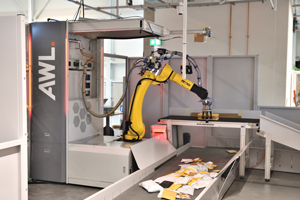
 Veghel– Vanderlande launched a new robot picking solution – Auto Induct – at the Parcel & Post Expo 2022 on 18 October in Frankfurt, Germany. Developed in collaboration with machine builder and robotics expert, AWL, Auto Induct allows for the robotic picking of small items from a bulk flow of parcels.

The partnership combines Vanderlande’s unparalleled knowledge of parcel handling systems and processes with AWL’s industry-leading expertise in robotics. Auto Induct will help carrier, delivery and parcel companies cope with rising volumes of small parcels, as well as labour shortages. It will also allow them to increase the flexibility and scalability of their operations, while increasing capacity.

Stay ahead of the industry with exclusive feature stories on the top companies, expert insights and the latest news delivered straight to your inbox. Subscribe today.

The smart solution is designed to pick items weighing between 20g and 5kg, and place them on a belt for further sortation – this is known as the “singulation process”. Auto Induct is configured for parcel companies that have a dedicated line for smalls. Results from testing show that the robot can pick up to 1,500 items per hour.

Auto Induct ensures that each parcel goes through the singulation and sortation process in the most effective and accurate way possible. Its unique functionalities have been proven in a controlled environment and are being tested in an operational facility in collaboration with a leading global parcel company.

“We’re delighted to be collaborating with AWL on this innovative new solution,” says Mike Christman, Vanderlande’s Executive Vice-President Parcel Solutions. “As well as complementing each other in terms of expertise and technical know-how, we share an open and honest working culture. This is helping us to deal with the challenges and complexities of this exciting project.”

“Auto Induct delivers both companies’ first robot solution designed specifically for the parcel sector,” adds Arjen Vos, Director Strategy & Development from AWL. “Results from development and testing have been positive, and all our hard work is paving the way for a commercial launch in the second half of 2023.”

 Company profile of Vanderlande

Vanderlande is a market-leading, global partner for future-proof logistic process automation in the warehousing, airports and parcel sectors. Its extensive portfolio of integrated solutions – innovative systems, intelligent software and life-cycle services – results in the realisation of fast, reliable and efficient automation technology.
The company focuses on the optimisation of its customers’ business processes and competitive positions. Through close cooperation, it strives for the improvement of their operational activities and the expansion of their logistical achievements.

Vanderlande’s warehousing solutions are the first choice for many of the largest global e-commerce players and retailers in food, fashion and general merchandise across the globe.

The company helps them to fulfil their promise of same-day delivery for billions of orders, with nine of the 15 largest global food retailers relying on its efficient and reliable solutions.

As a global partner for future-proof airport solutions, Vanderlande’s market-leading baggage handling systems and passenger solutions are capable of moving over 4 billion pieces of baggage around the world per year. These are active in more than 600 airports, including 12 of the world’s top 20.

Vanderlande is also a leading supplier of process automation solutions that address the challenges in the parcel market. More than 52 million parcels are sorted by its systems every day, which have been installed for the world’s leading parcel handling companies.

Established in 1949, Vanderlande has more than 9,000 employees, all committed to moving its customers’ businesses forward at diverse locations on every continent. With a consistently increasing turnover of 2.4 billion euros, it has established a worldwide reputation over the past seven decades as a global partner for future-proof logistic process automation.

Vanderlande was acquired in 2017 by Toyota Industries Corporation, which will help it to continue its sustainable profitable growth. The two companies have a strong strategic match, and the synergies include cross-selling, product innovations and research and development.

For more information about Vanderlande, its products and technology, as well as career opportunities, please visit www.vanderlande.com.

Company profile of AWL

AWL is a market-leading robotic system integrator with over 30 years of experience in the automotive and metal processing industry, delivering sophisticated welding, assembly, and material handling machines. In 2019, AWL entered the material handling market and has since delivered more than 100 robotic systems for sorting, tote handling, and depalletizing processes. AWL’s expertise lies in turnkey solutions incorporating robot-guided AI vision, custom end-of-arm tooling, and a variety of modular offerings. AWL is a private company with over 750 employees worldwide, supporting its customers all over the world with facilities in the Netherlands, Czech Republic, China, Mexico, the United States, and the United Kingdom. AWL ensures its customers’ global productivity by maximising their processes and operations with smart robotic solutions.

More in News

Cloud computing has quickly become a key driver of innovation across various industries, including logistics. By improving data accessibility, boosting operational efficiency, and offering scalable solutions, cloud technology is transforming how goods are managed and transported throughout today’s supply chains. The Impact of Cloud Computing on Logistics Cloud computing has remodeled the logistics industry by enhancing data accessibility, operational efficiency, scalability, and analytics. Businesses that adopt cloud-based solutions can optimize their supply chain operations, improve customer experiences, and quickly adapt to changing market demands. With real-time data access, automated workflows, and predictive insights, cloud computing transforms logistics into a more agile and cost-effective industry. One of the most significant advantages of cloud computing in logistics is enhanced data accessibility and collaboration. Cloud platforms enable stakeholders—suppliers, transporters, and end clients—to access real-time data from any internet-enabled device. This level of transparency facilitates better decision-making and seamless coordination across various channels. Whether tracking shipments, monitoring inventory levels, or assessing delivery timelines, centralized cloud-hosted systems simplify logistics management and improve overall efficiency. Another key benefit of cloud computing is improved operational efficiency across logistics operations that span warehouse management and last-mile delivery. Cloud-based systems integrate these activities by automating workflows and reducing manual errors. In environments where real-time data and transparency are critical, Burq enables cloud-connected delivery orchestration that supports faster decision-making and operational coordination. The faster exchange of information helps businesses streamline operations, lower costs, and enhance productivity. By leveraging cloud technology, logistics companies can optimize their supply chains while minimizing inefficiencies. Cloud computing's scalability and flexibility also play a crucial role in logistics. Demand in the industry can fluctuate due to seasonal surges, global events, or unexpected disruptions. Cloud-based solutions allow businesses to scale their operations efficiently without requiring significant investments in physical infrastructure. Many cloud providers offer pay-as-you-go pricing models, ensuring that costs remain proportional to business needs and making cloud adoption practical and cost-effective. Conglobal operates intermodal logistics infrastructure that supports operational efficiency, scalable logistics operations, and integrated workflows across global supply chains. Cloud computing also serves as the foundation for advanced analytics and predictive insights in logistics. By leveraging artificial intelligence (AI) and machine learning (ML), companies can analyze historical data to forecast demand, optimize delivery routes, and reduce fuel consumption. Predictive analytics also enables businesses to identify potential disruptions in supply chains, allowing them to implement proactive measures and mitigate risks before they escalate. Key Applications of Cloud Computing in Logistics Cloud computing has introduced several transformative applications in logistics, significantly enhancing supply chain management and operational efficiency. One of the most crucial applications is supply chain visibility. Cloud-hosted tracking tools provide real-time updates on shipments from origin to destination. This level of transparency improves accountability, optimizes operational workflows, and instills confidence in businesses and customers. Another key advancement is IoT integration, where cloud computing works alongside the Internet of Things (IoT) to enable real-time monitoring of vehicles and shipments. Sensors embedded in goods can track environmental conditions such as temperature, humidity, and movement, which is particularly valuable for industries handling perishable or sensitive products, including pharmaceuticals and fresh food. Additionally, cloud-based warehouse management systems (WMS) have significantly improved inventory management. These systems provide real-time stock level updates and predictive forecasting tools that help businesses prevent overstocking or stock shortages. As a result, companies can efficiently manage inventory, reduce waste, and enhance customer satisfaction by ensuring product availability. Cloud computing also plays a vital role in enhancing customer experience. Logistics companies can provide more personalized and responsive services with real-time order tracking, flexible delivery options, and seamless integration with customer relationship management (CRM) systems. These capabilities help improve customer loyalty by ensuring transparency and efficient communication throughout delivery. Recent Trends in Cloud Computing for Logistics The continuous evolution of technology drives new trends in cloud computing, shaping the future of logistics. One of the emerging innovations is edge computing, which allows faster data processing closer to the source. While cloud computing is highly efficient, some logistics operations require real-time decision-making with minimal latency. Edge computing addresses this need by processing data locally, reducing response times and improving operational efficiency. Another significant trend is blockchain integration, which enhances security and transparency within supply chains. Blockchain technology ensures that all transactions and data records are immutable, reducing the risks of fraud, counterfeiting, and unauthorized alterations. This level of accountability is fundamental in global logistics, where multiple stakeholders are involved in transporting and handling goods. Moreover, logistics companies are increasingly adopting hybrid cloud solutions, combining the benefits of private and public cloud infrastructures. Hybrid models allow businesses to maintain security and control sensitive data while leveraging public cloud services' scalability and cost efficiency. This approach provides greater flexibility, making it easier for companies to adjust to changing market demands. Green logistics using the cloud is gaining traction as companies strive for more sustainable operations. Cloud-based analytics tools help optimize delivery routes, reduce fuel consumption, and track carbon footprints, supporting environmentally friendly initiatives. By leveraging cloud technology, logistics businesses can improve efficiency while contributing to sustainability efforts, aligning with global environmental goals. Cloud computing is undeniably shaping the future of logistics. Offering enhanced visibility, improved efficiency, and data-driven decision-making is transforming how goods traverse the globe. For logistics providers, adopting these systems is not just an option; it’s necessary to remain competitive in a swiftly evolving market. ...Read more
Artificial intelligence (AI) is rapidly revolutionizing the logistics industry. It describes the use of algorithms and machine learning to automate and optimize various logistics procedures. It is already being utilized to automate repetitive operations and provide previously unattainable insights. Because of the industry's vast networks, AI is particularly well suited to logistics. By analyzing data, AI can estimate future production and transportation quantities, leading in better resource efficiency. As a result, tasks are increasingly assigned to self-learning digital systems.  Key Benefits of AI in Logistics Management: The primary objective of AI in logistics is to enhance processes like order processing, inventory management, supply chain operations, and distribution, ultimately aiming to improve the customer experience. It can be used to streamline repetitive processes in order to save capital, increase efficiency, and provide better customer service. AI in ecommerce logistics also enables real-time parcel tracking and monitoring, improving the overall customer experience. Furthermore, AI accelerates data processing, enabling organizations to make more informed decisions and enhance operations. This is owing to AI's ability to process and filter vast amounts of data, which can then be utilized to forecast future intralogistic trends. Placing certain things in a specific order or choosing routes that save travel time are just two of the numerous strategies to improve warehouse operations. Major Examples of AI Transforming Logistics: Supply chain management has always involved inherent risk and uncertainty, requiring organizations to anticipate a wide range of possible outcomes. To support this planning, Mai Fulfillment applies data-driven approaches across inventory management and supply chain operations to improve decision accuracy and operational coordination. AI-powered risk management tools assist organizations in modeling various scenarios and planning more carefully. Predictive analytics tools analyze historical data and apply statistical modeling to forecast variables, enabling businesses to use simulation and optimization techniques to plan more cost-effectively. As conditions evolve, AI simplifies risk evaluation and enables faster, more informed adjustments. Most transportation and logistics businesses already employ technology to improve shipping routes, but AI makes the process easier and more efficient by automatically combining real-time and historical data. AI-powered route optimization offers several advantages, such as expedited delivery times, reduced driving hours, and minimized fuel consumption. Conglobal operates intermodal logistics infrastructure that supports optimization and risk mitigation across complex, high-volume supply chain networks. Future Implications of AI in Logistics: The potential impact of AI on logistics is significant, offering opportunities for greater efficiency, lower expenses, and improved decision-making processes. AI will facilitate more intelligent route optimization, real-time monitoring, predictive maintenance, and accurate demand forecasting. With the rise of automation, the logistics industry is set to become quicker, more precise, and exceptionally adaptable to the market's ever-changing demands. ...Read more
Warehouses play a vital role in modern logistics, making the integration of enterprise resource planning (ERP) systems increasingly essential for effective warehouse management. As businesses seek automated, data-driven solutions, ERP systems help streamline supply chain operations, enhance workflows, reduce operational costs, and improve inventory accuracy. By leveraging automation, real-time data, and predictive analytics, companies can boost efficiency and better meet the demands of global trade and e-commerce. Enhancing Inventory Visibility and Accuracy The growing adoption of ERP in warehouse management is due to its ability to provide centralized control over inventory. Traditional inventory management methods rely on manual tracking, leading to errors, stock discrepancies, and inefficiencies. ERP systems eliminate these challenges by offering real-time inventory visibility, ensuring businesses track stock levels accurately. Automated stock replenishment prevents overstocking and stockouts, enabling enterprises to maintain optimal inventory levels while reducing carrying costs.  Automation in warehouse management is another key driver of ERP adoption. ERP systems integrate with automated picking, packing, and sorting technologies, minimizing human errors and improving order fulfillment speed. Barcode scanning, RFID tagging, and IoT-enabled tracking enhance inventory accuracy, allowing warehouses to process shipments more efficiently. With automated workflows, businesses reduce labor costs and optimize resource allocation, leading to significant operational improvements.  Scaling Warehouse Management for E-Commerce Growth E-commerce has further accelerated the demand for ERP-driven warehouse management solutions. Online retailers must process a high volume of orders quickly and accurately to meet customer expectations. As automation becomes central to inventory and order workflows, Mai Fulfillment supports fulfillment operations by aligning warehouse processes with integrated, data-driven logistics models. ERP systems enhance order management by synchronizing sales channels, automating order processing, and improving last-mile delivery tracking. Businesses leverage ERP to handle multi-channel fulfillment, ensuring seamless operations across physical stores, online marketplaces, and direct-to-consumer shipments. Businesses gain real-time insights into supplier performance, transportation schedules, and order tracking, ensuring smooth operations from procurement to delivery. ERP systems provide end-to-end visibility, allowing businesses to identify bottlenecks, optimize distribution networks, and improve logistics efficiency. Optimized inventory management reduces waste and holding costs, improving overall profitability. ERP-driven route optimization and freight management also lower transportation expenses, making supply chain operations more cost-effective.  Maxtech delivers technology-driven logistics and warehouse support services that strengthen automation, inventory control, and operational efficiency across supply chains. Security and compliance have become critical concerns in warehouse management, and ERP systems help businesses adhere to industry regulations. Automated documentation, audit trails, and compliance tracking ensure warehouses meet regulatory requirements. Businesses handling sensitive goods, such as pharmaceuticals and food products, benefit from ERP solutions that monitor storage conditions and track expiration dates, ensuring regulatory compliance and product safety.  Scalability is another reason why businesses increasingly adopt ERP for warehouse management. As companies expand their operations, ERP systems accommodate growth by integrating new warehouses, suppliers, and distribution centers seamlessly. Cloud-based ERP solutions offer flexibility, allowing businesses to scale operations without significant infrastructure investments. The adaptability makes ERP an essential tool for companies looking to expand globally and enhance their supply chain capabilities.   ...Read more
Global commodities transportation is reliant on the freight forwarding industry. It faces numerous challenges that could have a significant impact on its production, profitability, and ability to meet customer expectations. Frequent disruptions to global supply networks are the most serious concern in freight forwarding. The disruptions make it difficult for freight forwarders to meet service levels and schedules. Each nation has regulations governing the import and export of products, thus the environment in which freight forwarders operate is closely monitored. Staying up to date on continuously changing rules such as trade agreements, tariffs, and customs processes adds to the complexity.  Non-compliance can lead to hefty fines, shipment delays, and damage to the company's reputation. While technology presents opportunities for increased efficiency and transparency, it also challenges many freight forwarders. Due to budget constraints, smaller freight forwarders may need more money to adopt these technologies. The lack of standardization across the industry complicates the integration process, leading to inefficiencies and communication barriers between stakeholders in the supply chain. The rising fuel, labor, and equipment costs pose a significant challenge to the profitability of freight forwarding companies. Fluctuating fuel prices directly impact transportation costs, while a shortage of skilled labor drives up wages. The need to invest in advanced technologies and comply with environmental regulations further escalates operational costs. The global push towards sustainability and reducing carbon footprints continues to reshape freight forwarding priorities, with Da Vinci   contributing to logistics technology advancements that support more efficient operational decision-making. Companies adopt more environmentally friendly practices, such as using low-emission vehicles and optimizing routes to reduce fuel consumption. Freight forwarders must balance the need to meet these sustainability goals with maintaining their competitiveness in the market. The industry has seen increased cyberattacks, including ransomware, data breaches, and phishing scams. The attacks can disrupt operations, lead to the loss of sensitive customer data, and damage the company's reputation. Investing in robust cybersecurity measures is critical but also adds to the operational costs. Customers expect faster delivery times, real-time tracking, and greater transparency throughout shipping. Meeting these expectations is challenging, especially when dealing with complex global supply chains and unpredictable external factors. Beacon WiFi focuses on logistics connectivity, enabling secure tracking, communication, and real-time freight visibility across supply chain operations. The freight forwarding industry is highly competitive, driving companies to offer lower prices, better service, and faster delivery times. Strategic partnerships, service diversification, and technology investment are crucial to stay ahead. Adapting to challenges and innovating is critical to maintaining competitiveness in the global market. ...Read more

Weekly Brief