
Logistics Tech Outlook

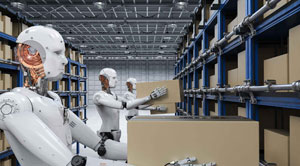
Here Is How AI Molds Into The Future Inventory Management

AI fundamentally changes the extent to which consumers buy or sell products from inventory management.

FREMONT, CA:  Digitalization is certainly raising the profile of the industrial ecosystem and creating advanced gateways to the advanced society. Digital engineering has a driving force on the workforce that has changed the way workers worked. Bots are already communicating with people and growing a company's profitability. It is now becoming popular to see machines operating on floors to increase a team's power, productivity, and decisiveness.

Stay ahead of the industry with exclusive feature stories on the top companies, expert insights and the latest news delivered straight to your inbox. Subscribe today.

And with the introduction of auto-driving cars and robots, it is reasonable to assume that in the near future the population will see a massive change. With the advent of Artificial Intelligence, project management and supply chain have the potential to simplify the workplace. Through optimizing inventory productivity and increasing product degradation, revolutionary ideas are already affecting the business.

Several new additions of AI usages are now improving the way people look at the processes of the stock and supply chain. The innovative systems have developed revolutionary methods, which satisfy the customer's needs and requirements.

Automated surveillance of Inventories

AI gives an insight into how businesses can modify the face of the industries by using the mathematical sequence to eliminate the use of any unnecessary inventory checks. It also allows an organization an opportunity to use its resources and assets elsewhere, which is another plus point for any company.

Simultaneously, at the same time, AI automated robots can perform several tasks that will increase their production level. Even a maintenance technician gets a chance to maintain a real-time track of an item without even physically putting effort. It's all just a click away from them or a pocket away. Smartphones and AI would undoubtedly bring them the transition.

Check Out This: Auto Business Outlook 

Top Inventory Management Solution Companies

Presently, AI refers to a fridge model and as an independent shelf level. It gives organizations the opportunity to keep records of entire purchase orders and ensure the stock is in the management process. When a supply chain dip occurs, AI will mail out with any manual interference a repurchase order at that time. Besides this, it has removed the risk of physical error that is quite prevalent during the processing of bulk data. AI will provide more reliable results and give the order at an affordable price. It will keep the money in place so that no unnecessary or incorrect order is executed.

Machine Learning

In contrast to AI, machine learning has also affected businesses' technologies and techniques. It has rendered the jobs obsolete to correctly evaluate bulk data and boost demand and supply chain prediction. Previously, the accurate prediction was hard to come up with; however, with the aid of Machine Learning, AI knows the correct quality of the supply chain through which it correctly sends out the application.

In addition, simulation software has also allowed real-time data processing, enabling AI to evaluate the data sets and monitor them over time. Machine Learning helped reduce the overall cost and increase the efficiency of customer shipments.

AI and deep learning have driven the experience of traditional software into the supply and demand operations that were unlikely. Reinforcement training, guided discovery, and unsupervised learning are all integrated into one package, making it more suitable to use to keep a record of business, manufacturer, or warehouse's entire stock process.

AI radically changes the way consumers buy or sell products from inventory management. This includes the up-gradation of all the raw material data up to the shipment day. In the deep end of AI technology will take time to penetrate the full extent of the marketplace. However, experts are certain that the full potential of automated robots is projected to enter the industrial framework very quickly.

More in News

Artificial intelligence (AI) is rapidly revolutionizing the logistics industry. It describes the use of algorithms and machine learning to automate and optimize various logistics procedures. It is already being utilized to automate repetitive operations and provide previously unattainable insights. Because of the industry's vast networks, AI is particularly well suited to logistics. By analyzing data, AI can estimate future production and transportation quantities, leading in better resource efficiency. As a result, tasks are increasingly assigned to self-learning digital systems.  Key Benefits of AI in Logistics Management: The primary objective of AI in logistics is to enhance processes like order processing, inventory management, supply chain operations, and distribution, ultimately aiming to improve the customer experience. It can be used to streamline repetitive processes in order to save capital, increase efficiency, and provide better customer service. AI in ecommerce logistics also enables real-time parcel tracking and monitoring, improving the overall customer experience. Furthermore, AI accelerates data processing, enabling organizations to make more informed decisions and enhance operations. This is owing to AI's ability to process and filter vast amounts of data, which can then be utilized to forecast future intralogistic trends. Placing certain things in a specific order or choosing routes that save travel time are just two of the numerous strategies to improve warehouse operations. Major Examples of AI Transforming Logistics: Supply chain management has always involved inherent risk and uncertainty, requiring organizations to anticipate a wide range of possible outcomes. To support this planning, Mai Fulfillment applies data-driven approaches across inventory management and supply chain operations to improve decision accuracy and operational coordination. AI-powered risk management tools assist organizations in modeling various scenarios and planning more carefully. Predictive analytics tools analyze historical data and apply statistical modeling to forecast variables, enabling businesses to use simulation and optimization techniques to plan more cost-effectively. As conditions evolve, AI simplifies risk evaluation and enables faster, more informed adjustments. Most transportation and logistics businesses already employ technology to improve shipping routes, but AI makes the process easier and more efficient by automatically combining real-time and historical data. AI-powered route optimization offers several advantages, such as expedited delivery times, reduced driving hours, and minimized fuel consumption. Conglobal operates intermodal logistics infrastructure that supports optimization and risk mitigation across complex, high-volume supply chain networks. Future Implications of AI in Logistics: The potential impact of AI on logistics is significant, offering opportunities for greater efficiency, lower expenses, and improved decision-making processes. AI will facilitate more intelligent route optimization, real-time monitoring, predictive maintenance, and accurate demand forecasting. With the rise of automation, the logistics industry is set to become quicker, more precise, and exceptionally adaptable to the market's ever-changing demands. ...Read more
Warehouses play a vital role in modern logistics, making the integration of enterprise resource planning (ERP) systems increasingly essential for effective warehouse management. As businesses seek automated, data-driven solutions, ERP systems help streamline supply chain operations, enhance workflows, reduce operational costs, and improve inventory accuracy. By leveraging automation, real-time data, and predictive analytics, companies can boost efficiency and better meet the demands of global trade and e-commerce. Enhancing Inventory Visibility and Accuracy The growing adoption of ERP in warehouse management is due to its ability to provide centralized control over inventory. Traditional inventory management methods rely on manual tracking, leading to errors, stock discrepancies, and inefficiencies. ERP systems eliminate these challenges by offering real-time inventory visibility, ensuring businesses track stock levels accurately. Automated stock replenishment prevents overstocking and stockouts, enabling enterprises to maintain optimal inventory levels while reducing carrying costs.  Automation in warehouse management is another key driver of ERP adoption. ERP systems integrate with automated picking, packing, and sorting technologies, minimizing human errors and improving order fulfillment speed. Barcode scanning, RFID tagging, and IoT-enabled tracking enhance inventory accuracy, allowing warehouses to process shipments more efficiently. With automated workflows, businesses reduce labor costs and optimize resource allocation, leading to significant operational improvements.  Scaling Warehouse Management for E-Commerce Growth E-commerce has further accelerated the demand for ERP-driven warehouse management solutions. Online retailers must process a high volume of orders quickly and accurately to meet customer expectations. As automation becomes central to inventory and order workflows, Mai Fulfillment supports fulfillment operations by aligning warehouse processes with integrated, data-driven logistics models. ERP systems enhance order management by synchronizing sales channels, automating order processing, and improving last-mile delivery tracking. Businesses leverage ERP to handle multi-channel fulfillment, ensuring seamless operations across physical stores, online marketplaces, and direct-to-consumer shipments. Businesses gain real-time insights into supplier performance, transportation schedules, and order tracking, ensuring smooth operations from procurement to delivery. ERP systems provide end-to-end visibility, allowing businesses to identify bottlenecks, optimize distribution networks, and improve logistics efficiency. Optimized inventory management reduces waste and holding costs, improving overall profitability. ERP-driven route optimization and freight management also lower transportation expenses, making supply chain operations more cost-effective.  Maxtech delivers technology-driven logistics and warehouse support services that strengthen automation, inventory control, and operational efficiency across supply chains. Security and compliance have become critical concerns in warehouse management, and ERP systems help businesses adhere to industry regulations. Automated documentation, audit trails, and compliance tracking ensure warehouses meet regulatory requirements. Businesses handling sensitive goods, such as pharmaceuticals and food products, benefit from ERP solutions that monitor storage conditions and track expiration dates, ensuring regulatory compliance and product safety.  Scalability is another reason why businesses increasingly adopt ERP for warehouse management. As companies expand their operations, ERP systems accommodate growth by integrating new warehouses, suppliers, and distribution centers seamlessly. Cloud-based ERP solutions offer flexibility, allowing businesses to scale operations without significant infrastructure investments. The adaptability makes ERP an essential tool for companies looking to expand globally and enhance their supply chain capabilities.   ...Read more
Global commodities transportation is reliant on the freight forwarding industry. It faces numerous challenges that could have a significant impact on its production, profitability, and ability to meet customer expectations. Frequent disruptions to global supply networks are the most serious concern in freight forwarding. The disruptions make it difficult for freight forwarders to meet service levels and schedules. Each nation has regulations governing the import and export of products, thus the environment in which freight forwarders operate is closely monitored. Staying up to date on continuously changing rules such as trade agreements, tariffs, and customs processes adds to the complexity.  Non-compliance can lead to hefty fines, shipment delays, and damage to the company's reputation. While technology presents opportunities for increased efficiency and transparency, it also challenges many freight forwarders. Due to budget constraints, smaller freight forwarders may need more money to adopt these technologies. The lack of standardization across the industry complicates the integration process, leading to inefficiencies and communication barriers between stakeholders in the supply chain. The rising fuel, labor, and equipment costs pose a significant challenge to the profitability of freight forwarding companies. Fluctuating fuel prices directly impact transportation costs, while a shortage of skilled labor drives up wages. The need to invest in advanced technologies and comply with environmental regulations further escalates operational costs. The global push towards sustainability and reducing carbon footprints continues to reshape freight forwarding priorities, with Da Vinci   contributing to logistics technology advancements that support more efficient operational decision-making. Companies adopt more environmentally friendly practices, such as using low-emission vehicles and optimizing routes to reduce fuel consumption. Freight forwarders must balance the need to meet these sustainability goals with maintaining their competitiveness in the market. The industry has seen increased cyberattacks, including ransomware, data breaches, and phishing scams. The attacks can disrupt operations, lead to the loss of sensitive customer data, and damage the company's reputation. Investing in robust cybersecurity measures is critical but also adds to the operational costs. Customers expect faster delivery times, real-time tracking, and greater transparency throughout shipping. Meeting these expectations is challenging, especially when dealing with complex global supply chains and unpredictable external factors. Beacon WiFi focuses on logistics connectivity, enabling secure tracking, communication, and real-time freight visibility across supply chain operations. The freight forwarding industry is highly competitive, driving companies to offer lower prices, better service, and faster delivery times. Strategic partnerships, service diversification, and technology investment are crucial to stay ahead. Adapting to challenges and innovating is critical to maintaining competitiveness in the global market. ...Read more
Logistics professionals use the terms "first- and last-mile delivery" to describe how goods move across the supply chain. When a consumer places an online order, the first leg of the supply chain begins with the retailer receiving the goods, packing it, and delivering it to the courier.  This is referred to as "first-mile delivery." Last-mile delivery occurs when an item is delivered from the shipping warehouse to the customer's door. Last-mile logistics are crucial in the supply chain because they have a substantial impact on the customer experience. An innovative Last-mile delivery solution bridges the gap between distribution centers and end consumers, making deliveries seamless. Key Benefits of Last-Mile Delivery Services: With e-commerce serving as the backbone of most retail businesses, last-mile logistics must improve to fulfill consumers' high expectations. Shipping can be confusing, especially for small businesses just starting. Partnering with last-mile courier companies provides a plethora of online tools, portals, and instructions to assist businesses in streamlining their shipping procedures. If companies have a large number of parcels, the automated system will make repeated activities more manageable. Furthermore, unanticipated issues might develop when operating an e-commerce company, such as sudden increases in orders, broken packages, and demands for scheduled delivery. Working with a last-mile logistics company can help reduce the problem's severity by allowing specialists to handle all shipping operations while maintaining delivery quality. Navigating the Components of Last-Mile Logistics: The first leg of last-mile delivery begins when businesses send the order to a holding center or warehouse. Other subprocesses occur during this stage. Businesses that employ order management systems will have automated workflows for some of these tasks. The first step is determining which fulfillment center to deliver the shipment to. The fulfillment center is chosen for various reasons, including its proximity to the delivery address. Selecting the closest holding center based on the customer's delivery address helps to reduce the ultimate shipping cost. International orders can take a long to ship, depending on the product and customs regulations. Imports and exports must be inspected before they are cleared for delivery to the customer. At this step, the mode of transportation is also chosen based on various variables. Safety and handling guidelines are utilized to decide the optimum mode of transportation and vessel to use. Furthermore, the consumer can select the shipping method from the provided options. This allows individuals to choose based on considerations such as cost. Additionally, a courier service might select a transportation mode based on the product type. It comes down to practicality and adaptability on both sides. ...Read more

Weekly Brief