

THANK YOU FOR SUBSCRIBING


Logistics Tech Outlook Weekly Brief
Be first to read the latest tech news, Industry Leader's Insights, and CIO interviews of medium and large enterprises exclusively from Logistics Tech Outlook

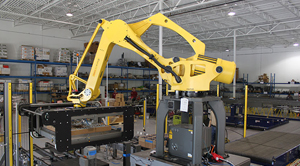 Connected automated systems facilities managers, experts, and other industry professionals have admittance to many types of data they did not have before.
FREMONT, CA: Every periphery in the logistics and supply chain industry counts. Thus, facility managers and decision-makers ubiquitously are exploring the advantages of automated material handling. This group of technologies can bring new levels of safety, productivity, and profitability to these significant verticals.
Stay ahead of the industry with exclusive feature stories on the top companies, expert insights and the latest news delivered straight to your inbox. Subscribe today.
1. Higher-Value Jobs
When people talk about automation, they center their time on the potential displacement of human workers. In actuality, automation is an accompaniment to human effort, and firms that navigate the transition to discerning automation well often do not have to lose even a single worker.
[vendor_logo_first]Instead, it is the employee roles that are changing. One automotive parts enterprise discovered that automation assists workers move into higher-value, higher-paying jobs, and end up leaving the repetitive tasks, such as quality management, to the more capable eyes and ears of automated inspection tools.
2. Better Access to Data
Before the widespread of automation, various work areas and equipment in an industrial setting represented heaps of process data. Connected automated systems facilities managers, experts, and other industry professionals have admittance to many types of data they did not have before.
Significantly, this access permits the systems to correspond with one another. When a connected conveyor system in a distribution center can regulate product flow depending on surrounding conditions, including maintenance items, it means workers and machines alike can respond accordingly. The various parts of a facility can use the data to plan to foresee delays and changes.
3. Enhanced Quality Control
Some roles being inherited by robots, including automated material handling equipment, engage quality control and inspection processes. The concept of machine vision powered by AI has gained a lot of toehold in recent years and now benefits from top billing when enterprises start shopping around for coupled material handling systems. Compared with manual inspections, automated inspection employing machine vision discovers more errors and cuts waste by decreasing rework.
See also: Top Automotive Technology Companies
More in News
