

THANK YOU FOR SUBSCRIBING


Logistics Tech Outlook Weekly Brief
Be first to read the latest tech news, Industry Leader's Insights, and CIO interviews of medium and large enterprises exclusively from Logistics Tech Outlook

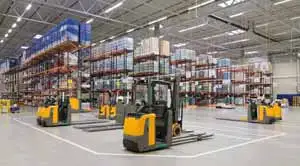 Material handling is a critical component of any warehouse's performance. It may enhance customer service by making items easier to locate, move, and ship.
FREMONT CA: Historically, manufacturing material handling systems relied on simplified data collecting methods. Historically, manufacturing material handling systems relied on simplified data gathering methods. It wasn't until recent years that traceability became a customer demand that more effective integrated material handling systems became apparent. Many businesses began their digital journeys at that time, seeking technologies that enhanced traceability and material handling efficiency.
Stay ahead of the industry with exclusive feature stories on the top companies, expert insights and the latest news delivered straight to your inbox. Subscribe today.
Adopting Innovative Material Handling Techniques
Material handling systems may help you save time and money by reducing labor, increasing productivity, lowering expenses, and improving inventory accuracy.
Systems Patchwork
When a company uses an expensive third-party barcoding solution that does not interface with their ERP system, they risk losing transactions, which results in erroneous shipping documentation, unpaid supplier bills, and incorrect inventory totals. The manufacturer achieves complete data integrity by combining barcoding data collecting with the ERP system.
Replenishment of Materials on the Shop Floor
The optimal combination of technology and methodology is required to achieve the optimal balance of timely and efficient material replenishment to production. A solution that integrates planning, scheduling, production execution, and material replenishment, with all system components communicating in real-time, provides manufacturers with the efficiency they require.
Traceability Taken to the Next Level
Manufacturers require a solution that tracks materials beginning with the unloading of the inbound receipts container from the truck, tracking the time spent outside climate-controlled locations, identifying who removed or added material to the container, and quantifying the test results for recorded attributes such as grade and country of origin. Following that, the system must track the consumption of WIP serial items and validate bought components during the outbound shipment process. Customer satisfaction is contingent upon having the correct system in place for monitoring supplies.
Warehouse Automation
Warehouses have a limited amount of space, personnel, and equipment. Eliminating paper pick lists, verbal directions, and visual signals in favor of an event- and data-driven automated materials handling system simplifies processes. It provides materials handlers with real-time updates and emphasizes balance. A customer may successfully minimize its material handling staffing by utilizing integrated automated material replenishment instruction technology.
More in News
