

THANK YOU FOR SUBSCRIBING


Logistics Tech Outlook Weekly Brief
Be first to read the latest tech news, Industry Leader's Insights, and CIO interviews of medium and large enterprises exclusively from Logistics Tech Outlook

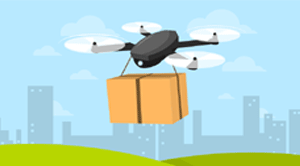 Drones will offer companies and investors numerous opportunities to take advantage of this emerging trend even after the pandemic ends.
FREMONT, CA:The term "drone" can be described in various ways, but it generally refers to any aerial vehicle that is either autonomously following a flight path or operated by a human operator. Drones that are mounted on the ground are also being used to assist with certain local deliveries. For any kind of drone, the COVID pandemic poses a niche that could help this device become the logistics industry's core element.
Stay ahead of the industry with exclusive feature stories on the top companies, expert insights and the latest news delivered straight to your inbox. Subscribe today.
Drones have proved their flexibility and unique value proposition when making challenging deliveries, despite their reputation as glorified toy helicopters. Drone technology has advanced dramatically in the last decade, with better sensors and navigation, and businesses are trying to find a way to commercialize drone-based shipping. Drones have faced regulatory hurdles on their path to becoming mainstream, but their flexibility has tempted logistics strategists to include them in their future plans.
 Due to the relatively short-range nature of drones, logistics providers can use them to easily reach customers from their distribution centers, especially in urban areas where numerous obstacles disrupt vehicular travel on the ground. But this has its own set of issues in areas where it is densely populated, and human operators may be required to ensure that drones are working in accordance with safety regulations. While some organizations have introduced guidelines in the hopes of providing some framework for using a drone, it is unclear whether long-term legislation would influence this aspect of logistics. Drone security is also a problem, as many of them will be vulnerable to theft or destruction by attackers.
Its size also determines the role of a drone. Drones can carry smaller packages to remote locations, which is more effective than using a truck. Drones may also be used to carry supplies to troops on the front lines of military battles. Larger drones are less effective, but they can be used to sort larger containers, such as those found in seaports worldwide.
During the COVID-19 outbreak, innovative drones were used to help healthcare organizations and vulnerable communities. In many places, the postal service is testing the use of drones to deliver prescriptions to retirement homes, keeping human operators on board for the time while removing the need for face-to-face interaction. Other drone operators are expanding into healthcare, providing personal protective equipment (PPE) or emergency medical supplies to field workers as a first-response alternative that can minimize interaction.
See Also:Top Digital Twin Solution Companies
More in News
