

THANK YOU FOR SUBSCRIBING


Logistics Tech Outlook Weekly Brief
Be first to read the latest tech news, Industry Leader's Insights, and CIO interviews of medium and large enterprises exclusively from Logistics Tech Outlook

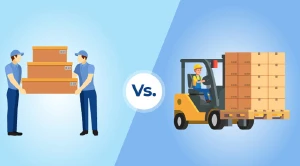 Businesses that deal with vast amounts of material handling and repetitive processes, like manufacturing and warehousing, benefit from automated material handling.
FREMONT, CA : The term "material handling system" represents a set of tasks that include product and material movement, packing and unpacking, storage, protection, and control. Material handling systems are essential in any operation, from manufacturing and warehousing to distribution and disposal.
Stay ahead of the industry with exclusive feature stories on the top companies, expert insights and the latest news delivered straight to your inbox. Subscribe today.
Material handling systems come in various shapes and sizes, and they're used in different sectors. Automotive, food and beverage, consumer products, construction, E-commerce, healthcare, and retail are just a few areas that use material handling systems extensively.
Manual Material Handling Systems
MMH stands for manual material handling, which is the process of handling or transporting goods manually. Pushing, tugging, lifting, retrieving, controlling, carrying, and holding are all examples of MMH.
Manual cranes, pallet trucks, slings and hooks, short-distance conveyors, and forklifts are used in this sort of handling, which is done manually.
Automated Material Handling Systems
Pre-programmed computerized systems with built-in technology for task completion are known as automated material handling systems. For material movement, storage, access, and location, these systems use cutting-edge technology.
For activities like picking, dropping, and pushing, automated material handling may need human intervention. Scissor lifts, dock levelers, pallet positioners, and automatic conveyors are examples of automated handling equipment.
Automated Material Handling Benefits
Increased Flexibility: Automated systems have a lot of flexibility. If users are scaling their business, they can program these systems to handle multiple processes at the same time. Companies can utilize automated tools to scale up or reduce in real-time with adequate preparation.
High Cost-Efficiency: In the long term, automated processes save money. The technology may be costly, especially if it's a customized product. But when human labor is minimized, the expense can be balanced. Tasks can be completed faster and more precisely with automation, increasing productivity.
Enhanced Workplace Safety: Employees will not have to lift or carry big weights with automated handling, reducing the possibility of trip-and-fall accidents. Physical concerns, including lower back pain, back injury, and weariness, are reduced as well.
Space Optimization: Space can be utilized to its full potential. Automated equipment, like forks, allows access to locations that are higher up. Without wasting space, this area can also be used to store products. Using an automated handling system, products can also be recovered more quickly and easily. Existing space is skillfully utilized to generate new space.
See Also : - Top Enterprise Communications Solution Companies
More in News
