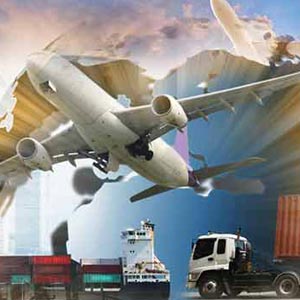
Logistics Tech Outlook

The Key Functions of a 3PL Provider

Using a third-party logistics provider's experience, streamlining the supply chain, and cost savings are all advantages of doing business with them.

FREMONT, CA: Third-party logistics providers (3PLs) provide logistics services to assist some or all parts of shipping operations at the most basic level. A 3PL provider's warehousing and transportation processes are typically linked to the organization they serve.

Stay ahead of the industry with exclusive feature stories on the top companies, expert insights and the latest news delivered straight to your inbox. Subscribe today.

3PLs can best serve needs by growing and adapting their services. Enterprises can decide how much of a role they want to play based on their personal preferences and objectives. A single service can be provided, or a package of services can be delivered covering a wide range of supply chains. To improve the visibility of the supply chain, these services integrate with existing workflows. Leading 3PLs also adds value by enhancing the company's operational, financial, and end-user performance.

Transportation: 3PLs can engage carriers, consolidate LCL or LTL freight, track freight payment, and insurance paperwork, and cooperate with private fleets when it comes to transportation.

Working with a 3PL can also help reduce transportation costs, improving efficiency, and finding solutions for complicated supply chain issues. 3 PL companies, on the other hand, are typically able to provide real-time visibility to inventory as it moves through various stages of the supply chain.

Shipping products worldwide: For companies, international shipping may be time-consuming, costly, and frustrating. Customs, freight forwarding, and consolidation can all be handled by 3PL to save enterprises both time and money. It is the job of a 3 PL to ensure that all trade regulations are satisfied, expenses are kept in check, and execution happens according to plan.

Science and technology: Managing e-commerce, client connections, transportation, and warehouse operations are just a few of the many ways a 3PL makes use of information technology. EDI, API, and cloud-based systems are the most often used solutions trusted by 3PLs. Supply chain processes and shipments in transit should be made more visible through whatever instrument is used.

3 PLs have several benefits. Working with a 3PL provider has a variety of advantages. Supply chain management logistics can be challenging, including fulfillment, warehousing, and shipping. 3PL companies are professionals in supply chain logistics and can assist customers with years of knowledge and connections to streamline procedures rapidly. Additionally, 3PLs can also shed light on the complexities of international shipping. Different shipping laws and regulations are just a few examples of these challenges. Working with a 3PL company can help alleviate the burden of adhering to foreign shipping standards.

More in News

The global supply chains have faced significant disruptions due to various factors, including geopolitical tensions, climate change, economic volatility, and technological inefficiencies. These challenges have brought to light the shortcomings of many existing systems, emphasizing the urgent need for transformative changes in supply chain management, particularly within the financial and payment sectors. Consequently, the emergence of fintech and AI has become a key driver of innovation, presenting substantial opportunities to modernize and enhance the efficiency of both the flow of goods and the movement of capital. Simplifying Complex Financial Transactions Supply chain transactions often face financial complexities due to multiple geographic origins, currencies, and financial systems. Payment processes can be slow and inefficient, resulting in delayed payments to suppliers and carriers. This creates cash flow issues, particularly for smaller suppliers who must wait a long time to receive payment. Furthermore, lengthy delivery times and manual data entry make it difficult for businesses to track payments and manage invoices effectively. Fintech solutions powered by AI can now address such challenges by automating many financial processes that are traditionally labor-intensive. AI tools can now extract and standardize unstructured data from invoices, bills, and other financial documents, making it easier to reconcile payments and update systems of record. It will save time and ensure the accuracy of results. Enhancing Efficiency Through Quicker Payment Processing Solutions The payment process continues to be a critical challenge in the supply chain sector, with suppliers and carriers often facing extended payment cycles that strain working capital. Traditional methods such as checks and wire transfers remain inefficient for the pace of global supply chains, while limited transparency around payment status further complicates financial planning. Platforms like HaulPay help streamline payment workflows by improving transaction visibility and enabling faster processing within supply chain operations. This lack of clarity makes it difficult for businesses to accurately anticipate incoming funds and manage financial stability effectively. Emerging fintech solutions address these pain points by offering faster, more transparent payment systems tailored to the needs of the supply chain industry. These solutions allow for real-time payments with more visibility into the status of transactions. This will help businesses improve cash flow, avoid payment delays, improve operations management, and prevent disruption. AI also optimizes payment terms, detecting fraud and assessing credit risk, making the payment ecosystem more reliable and secure. American Marine Insurance provides insurance solutions enhancing supply chain payment visibility and risk management across financial transactions and operations. Closing the Working Capital Gap The working capital gap is another significant challenge for businesses in the supply chain sector. Suppliers are often subjected to a long period between the time an order is placed and the time they receive payment, thus being forced to seek external financing to bridge the gap. Traditional financing options, such as bank loans, can be a relief, but many SMEs face challenges accessing such funding, making them susceptible to cash flow problems. Some fintech solutions provide alternative sources of financing, such as invoice factoring and supply chain finance, while allowing suppliers quick and, at times, easier terms, which facilitate maintaining more liquid conditions against otherwise possible pressures and stress upon finance. Fintech services that employ AI and other means of analysis have increased their accurate measurement of risks by way of credits while serving customized needs, and, on the one hand, allow complete coverage of any shortfall of funds. ...Read more
AI's integration with the global supply chain has moved beyond being an optional luxury for speculation and has become a very core pillar of operational excellence. As logistics networks have become more complex and scaled, reliance on manual oversight combined with legacy systems is increasingly inadequate for modern business requirements. Perfectly advanced algorithmic solutions provide the cognitive infrastructure that enables the previously complex arenas of international trade, warehousing, and last-mile distribution to be navigated with unprecedented accuracy. By integrating vast historical and real-time data, the systems can provide predictive clarity, empowering firms to anticipate shifts in the marketplace. These anticipatory improvements will signal a new era, where efficiency is maximized at every node of the value chain, going beyond what reactive models have delivered. While businesses are working hard to maintain their competitive edge in a fast-changing, ever-global economy, intelligent logistics serves as an active platform for long-term, sustainable growth and investment quality, aligning adoption with systemic change. How Does Predictive Intelligence Enhance Operational Efficiency? The intelligent systems optimize transportation routes and storage levels precisely, thereby directly tightening them into the bottom line. AI estimates the best routes for hauling freight using the least fuel-intensive and most timely methods by analyzing variables such as traffic patterns, weather conditions, and port congestion. Such optimization substantially reduces associated greenhouse emissions while also resulting in a lower total cost of ownership for fleet assets. More accurate demand forecasting from predictive modeling prevents the kind of heavy-heavy capital issues caused by overstocking or product shortages. When an enterprise aligns inventory procurement with actual consumer demand, it frees enormous amounts of working capital that can be reinvested in other strategic areas of the business. This systemic improvement in resource allocation guarantees that the entire logistics network remains nimble and responsive to changing global market needs. Why Is Real-Time Data Essential For Resilience? Total visibility throughout the entire supply chain becomes necessary in the face of sudden disruption-related risks and variability in the surrounding environment, as a bottleneck can be identified through automated monitoring, the system suggesting alternative logistics strategies and executing final commitment, thereby assuring the integrity of customer orientation. The intelligent platforms build a unified view of operations for all stakeholders, enabling them to discover and address immediate anomalies in delivery time schedules. This level of transparency fosters a deeper sense of reliability and trust among supply chain partners and end customers. The value of continual monitoring data also lies in capturing trends for long-term strategic input, helping executives identify and refine operating models. With improved quality in data collection and analysis, companies can build a more resilient infrastructure to withstand the pressure from an increasingly coordinated and unpredictable world. This dedication to technical excellence means that logistics would be the driver, encouraging corporate success. ...Read more
Warehouses are now more than just places to store stuff. These days, they act as the focal points of intricate supply chain networks. Conventional warehouse management solutions are insufficient for organizations to succeed in today's fast-paced, customer-centric world. Leading warehouse management firms use cutting-edge technology to enhance supply chain visibility, optimize warehouse operations, and reduce procedures.  Warehousing plays a crucial role in operations by providing real-time stock status and location information. Traditional warehouse management systems automate many supply chain processes, reducing the risk of human error and ensuring efficient delivery. Meanwhile, advanced analytics and machine-learning capabilities enable these systems to optimize inventory levels based on predicted demand, supporting modern operations effectively. This boost in performance positions warehouses as a central pillar of efficiency. Radio frequency identification (RFID) is revolutionizing inventory tracking and control. RFID tags attached to products or pallets can transmit real-time data to a reader via wireless transmission, eliminating manual scanning. This technology minimizes the risk of errors, improves inventory accuracy, and streamlines warehouse operations. It is particularly effective for managing high-value or perishable goods. Enhancing Efficiency with Automation and Robotics   Automated storage and retrieval systems (AS/RS) are reshaping warehouse layouts by maximizing space utilization and improving operational flow. These systems rely on automated cranes or robotic mechanisms to move and store goods, increasing storage density while reducing the need for manual handling. Solutions such as HaulPay contribute to warehouse operations by streamlining financial coordination and supporting more efficient workflows across supply chain processes. AS/RS enhances overall performance, reduces labor costs, and improves safety across warehouse environments. Autonomous mobile robots (AMRs) are rapidly changing the landscape of warehouse automation. These robots can navigate their surroundings autonomously to pick, pack, and transport goods. Their responsive and scalable design enables them to adapt to changing layouts and fluctuating demand. Additionally, they are designed to work collaboratively with human workers, which boosts productivity while reducing the physical strain on staff. S.C. Ballard provides infrastructure solutions supporting warehouse operations efficiency and safety across logistics, automation systems, and supply chain processes. Leveraging Data Analytics for Enhanced Decision-Making    Artificial intelligence (AI) and machine learning (ML) are at the forefront of optimizing warehouse operations. AI analyzes vast amounts of data to predict demand, optimize inventory levels, and improve warehouse layouts. ML algorithms can enhance picking routes, forecast equipment failures, and overall warehouse efficiency. All warehouse equipment and systems are increasingly interconnected through the Internet of Things (IoT). IoT sensors can monitor specific environmental conditions such as temperature and humidity, track the location of goods, and assess equipment performance. This functionality aids in optimizing warehouse operations, improving safety, and reducing energy consumption. ...Read more
Global supply chains are becoming increasingly complex as businesses respond to rising customer expectations, labor shortages and growing order volumes. Faster deliveries, greater inventory accuracy and uninterrupted operations have become essential for remaining competitive. These changing demands are encouraging logistics providers to rethink traditional warehouse and distribution models by adopting technologies that improve speed, precision and operational flexibility. Automation has now extended far beyond simply dealing with predictable and repetitive warehouse functions. Robotics, artificial intelligence and real-time analysis are now an intrinsic part of the modern logistics environment to provide an interconnected facility and the most efficient flow of goods through a supply chain-from receipt of stock, through warehousing, picking and packing, to delivery to a customer. This combination of technologies will enable many companies to improve efficiency and performance levels in supply chains that are subject to increasing pressure. Driven by the explosion of e-commerce and the subsequent huge growth in distribution centers processing an ever-growing number of items and delivering to customers within ever-tightening delivery times, logistics functions must be able to adapt to the scale demanded of the supply chain without detriment to the accuracy, safety and satisfaction customers have come to expect. Rather than replace human employees with technology, robotics and automation will facilitate more intelligent workforces where technology will be working alongside employees, relieving them of physically demanding tasks, and increasing their capacity for sophisticated decision-making processes. Intelligent Robotics Improve Warehouse Performance Warehouse robotics are transforming how inventory is stored, retrieved and transported throughout distribution centers. Autonomous mobile robots, robotic picking systems and automated guided vehicles reduce manual handling while increasing the speed and consistency of warehouse operations. These systems function seamlessly alongside your warehouse team, carrying goods to and from your storage areas, pick areas and shipping locations with minimal disruption to the overall process. They use smart routing to guide the fastest paths, minimizing travel and increasing your overall warehouse output. Additionally, a greater amount of automation increases the accuracy of your inventory data. By reducing handling errors and increasing the visibility of your inventory as it moves throughout your facility, your organization will be better equipped to handle increased order volumes and better serve your customers, all with accurate inventory data. Artificial Intelligence Optimizes Logistics Operations Artificial intelligence is enhancing logistics automation by enabling systems to learn from operational data and make informed decisions in real time. Rather than relying solely on predefined rules, AI helps organizations adapt quickly to changing workloads, inventory levels and transportation requirements. Predictive analytics improve demand forecasting, workforce planning and inventory allocation, allowing logistics providers to optimize resources before operational bottlenecks develop. Machine learning models also identify opportunities to improve warehouse layouts, reduce travel distances and increase equipment utilization. Combining robotics with intelligent analytics creates highly responsive logistics environments that continuously improve operational efficiency while supporting better long-term planning. Automation Strengthens Supply Chain Resilience When the supply chain failed, we learned about the need for more resilient operations that are better equipped to respond to rapid market fluctuations. The efficiency of automated solutions allows businesses greater agility, as less reliance is placed on human hands, and standard practices can be deployed across numerous locations. An intelligent conveyor network, automated sorting machines and warehousing solutions will help keep production consistent during times of peak seasonality or unanticipated interruption, while an organization will also see less complexity as they introduce new distribution centres. These capabilities allow logistics providers to respond more effectively to changing customer expectations while maintaining reliable service across increasingly complex supply chain networks. “Robotics, artificial intelligence and real-time analysis are now an intrinsic part of the modern logistics environment to provide an interconnected facility and the most efficient flow of goods through a supply chain-from receipt of stock, through warehousing, picking and packing, to delivery to a customer.” Human and Machine Collaboration Creates Long-Term Value Successful automation strategies recognize that technology and skilled employees work best together. Robotics is highly effective at repetitive, physically demanding and time-sensitive tasks, while people continue to provide judgment, problem-solving and operational oversight that remain essential within modern logistics environments. Investment in workforce development is becoming just as important as investment in automation technologies. Organizations are training employees to manage robotic systems, interpret operational data and oversee increasingly digital warehouse operations, creating new opportunities for technical and operational careers. A collaborative approach allows businesses to improve productivity while creating safer workplaces and supporting long-term organizational growth through continuous innovation. Building the Future of Intelligent Logistics Logistics robotics and automation are redefining supply chain operations by improving efficiency, strengthening accuracy and increasing operational resilience. Connected technologies, intelligent robotics and data-driven decision-making are enabling organizations to build logistics networks that are faster, more adaptable and better prepared for future business demands. Continued advances in artificial intelligence, autonomous robotics and warehouse automation will further transform how goods move across global supply chains. Organizations that combine advanced technology with skilled talent and strategic planning will be well positioned to improve customer service, strengthen operational performance and lead the next generation of intelligent logistic. ...Read more

Weekly Brief