

THANK YOU FOR SUBSCRIBING


Logistics Tech Outlook Weekly Brief
Be first to read the latest tech news, Industry Leader's Insights, and CIO interviews of medium and large enterprises exclusively from Logistics Tech Outlook

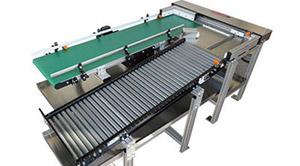 A conveyor system's fundamental function in any industry is to move bulk goods from one location in the production area to another.
FREMONT, CA: Conveyor systems come in various configurations and sizes, ranging from massive bulk product conveyors to micro conveyors for discrete product sorting. Industrial conveyor systems can transport virtually any product or material - metal, plastics, cartons, food, cosmetics, and medical supplies, to name a few. Conveyor types frequently used include classic belt conveyors, cable conveyors, screw or auger conveyors, roller conveyors, and bucket elevators.
Stay ahead of the industry with exclusive feature stories on the top companies, expert insights and the latest news delivered straight to your inbox. Subscribe today.
The primary function of a conveyor system—the reason they were invented—is to move products, goods, raw materials, or any other form of material between locations, often inside the same building or area. Conveyors are a subset of the intralogistics business segment - the process of automating, optimizing, and managing the movement of information and physical commodities within the confines of a single manufacturing or distribution facility.
The aerospace, agricultural, automotive, beverage, bottling and canning, building materials, chemical, computer, electrical, food processing, packaging, pharmaceutical, and printing sectors all make extensive use of this sort of equipment.
The Advantages of Industrial Conveyor Systems
Conveyor systems have a plethora of advantages for manufacturing facilities. The following are the most critical ones:
Enhanced safety: Conveyors are one of the most secure methods of transporting items across a manufacturing floor. They can be equipped with emergency stop buttons, speed changes, and other fail-safes and protections. These are the only solutions capable of raising productivity and efficiency without increasing the frequency of worker accidents or injuries.
Significant volume: A factory can never hope to transfer as much material as a conveyor system can. If your firm has reached its height, the moment has come to invest in an industrial conveyor that will enable you to increase production speeds even more.
Ongoing operation: Unlike humans, who require time to relax and recover from their job, robots can operate for far longer periods before needing to stop. Although routine maintenance is required, conveyor systems and associated automated procedures are orders of magnitude more efficient than human labor.
More in News
