
THANK YOU FOR SUBSCRIBING


Logistics Tech Outlook Weekly Brief
Be first to read the latest tech news, Industry Leader's Insights, and CIO interviews of medium and large enterprises exclusively from Logistics Tech Outlook


 Andy Schenck, Co-founder
Spot has built its approach around this changing expectation by combining technology with experienced logistics professionals to help shippers, carriers, and drivers manage transportation more effectively.
Since its founding in 2009, Spot has focused on finding smarter ways to handle freight movement. The company recognized early that technology would play a critical role in improving logistics operations. As customer requirements became more complex, Spot moved beyond traditional solutions and developed its own transportation management system, MySpot, in 2014.
The platform was created based on real customer needs and continues to evolve as those needs change. Because MySpot is proprietary technology developed and supported by Spot’s internal technology team, customer feedback can directly influence the features that support custom transportation networks, processes, integrations, and reporting needs.
Technology Built Around the Customer Experience
MySpot has become a central part of Spot’s logistics model, connecting shippers, carriers, and drivers through a single platform.
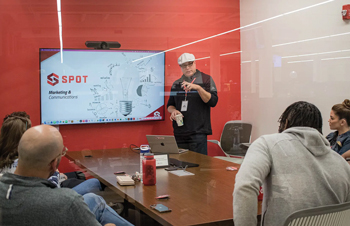 According to Spot, the goal behind MySpot has always been to make transportation easier to manage while providing greater control over freight operations. The platform supports features including API and EDI integrations, dynamic routing guides, shipment tracking, reporting, exception management, and freight audit visibility. MySpot is also designed to reduce common barriers associated with implementing transportation technology. The platform has no setup fees, supports integration mapping based on a customer’s existing technology environment, and is backed by Spot’s internal technology team. MySpot is SOC 2 compliant, and Spot also offers a performance guarantee designed to provide customers with additional accountability around results.
“Many TMS offerings either don’t have enough capabilities or are so large and fixed that they cannot provide customization. MySpot has seen success, in part, because it allows us to create solutions based on what our customers actually need,” says Andy Schenck, Co-founder at Spot.
Combining Data with Logistics Expertise
Technology alone does not solve every transportation challenge. Spot believes meaningful improvements come from combining data with industry knowledge. Its finance and analytics teams use information from MySpot and other internal tools to help customers better understand their operations and identify opportunities for improvement.
Instead of focusing only on basic shipment details, Spot examines broader operational factors, including lead times, appointment scheduling, and plant dwell times. These insights help customers make more informed decisions around service levels, efficiency, and costs.
This data-driven approach is supported by Spot’s logistics professionals, who bring practical industry experience to customer relationships. The company emphasizes that its role extends beyond transportation execution by working alongside customers as a long-term logistics partner.
Supporting Carriers and Improving Visibility
Spot’s carrier network is another important part of its business model. The company describes itself as carrier-driven, with technology designed to help carriers access freight opportunities and manage their operations more efficiently.
Through MySpot, carriers can search for loads, track shipments, and maintain relationships with shippers. Spot combines these digital capabilities with dedicated support from logistics experts to strengthen partnerships across its network.
Visibility has also become a major priority for modern supply chains. Spot provides real-time GPS tracking, automated status updates, proactive exception alerts, and shipment dashboards to help customers understand freight movement from pickup to final delivery.
Preparing For the Next Stage of Growth
With capabilities across truckload, LTL, expedited freight, and flatbed transportation, Spot works with customers across different shipping requirements. The company takes a customized approach by understanding each customer’s freight challenges and designing solutions accordingly.
Operating 24/7, 365 days a year, Spot continues to focus on keeping freight moving while improving the technology and services supporting its network. The company has been named Top 3PL Logistics Technology Solution 2026, reflecting its continued focus on customizable technology, operational expertise, and customer-focused logistics solutions.
As transportation continues to evolve, Spot’s vision remains centered on making freight movement simpler, more transparent, and more efficient through the combination of technology and human expertise.
Company
Spot
Management
Andy Schenck, Co-founder
Description
Spot combines proprietary technology, logistics expertise, and customer-focused service to simplify freight management. Through its MySpot transportation management system, the company enables greater visibility, customization, and efficiency for shippers, carriers, and drivers across complex supply chain operations.
