

THANK YOU FOR SUBSCRIBING


Logistics Tech Outlook Weekly Brief
Be first to read the latest tech news, Industry Leader's Insights, and CIO interviews of medium and large enterprises exclusively from Logistics Tech Outlook

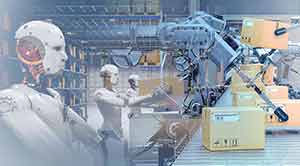 It's crucial to use best practices when building a material handling system to guarantee that all of the equipment and operations in a facility work together as a unified system.
Material handling is the movement, storage, and control of materials and products during manufacture, warehousing, distribution, consumption, and disposal. Material handling is a process that contains a variety of manual, semi-automated, and automated equipment and systems that assist logistics and keep the supply chain running.
Stay ahead of the industry with exclusive feature stories on the top companies, expert insights and the latest news delivered straight to your inbox. Subscribe today.
A well-designed system will enhance customer service, lessen inventory, shorten delivery times, and minimize overall handling costs in manufacturing, transportation, and distribution by examining the material handling process goals and aligning them to guidelines.
Following are the principles of material handling:
Planning
At the beginning of the design, define the proposed system's requirements, strategic performance targets, functional specifications, and supporting technologies. Suppliers, consultants, end-users, management, information systems, finance, engineering, and operations, should all contribute to the plan's development.
Work
Processes for material handling should be rationalized by lowering, combining, shortening, or eliminating excessive movement that impedes efficiency. Using gravity to aid material movement and straight-line movement as much as possible are a few examples.
Standardization
Material handling methods, equipment, controls, and software should all be systematic and capable of performing various jobs in operational environments.
Space exploitation
To make the most efficient employ of space inside a facility, keep work areas tidy and clutter-free, optimize storage density, and use overhead space.
Automation
Automated material handling engineering should be utilized whenever practicable and where it makes sense to improve operational efficiency, responsiveness, uniformity, and predictability.
System
From receiving (examination, store, packaging, and unitizing to shipping, transportation) to return handling, material movement and storage should be unified across the entire process.
Environment
When evolving the system, energy use and potential environmental effect should be considered, with reusability and recycling processes integrated where possible and safe practices for handling hazardous materials devised.
Check Out This : Warehouse Automation
More in News
